The staged fuel pump system achieves precise flow matching through the coordination of the main and auxiliary pumps. The Volkswagen EA888 Gen4 engine is equipped with a two-stage design: the low-pressure vane pump (70L/min@5bar) is responsible for the base fuel supply, and when the fuel rail demand exceeds 15MPa, the high-pressure plunger pump (peak 30MPa) intervenes. The actual measurement shows that in the WLTC cycle, the independent operating time of the low-pressure pump accounts for 83%, and the total power consumption of the system is reduced by 210W (a decrease of 37%).
The spatial constraint scenario demonstrates the integration advantage. The Mercedes-Benz AMG M139 engine adopts a coaxial series structure: The main Fuel Pump has a diameter of 72mm and an output flow rate of 150L/min. The embedded centrifugal booster module increases the pressure to 6.8bar. This scheme saves 30% of the axial space compared with the traditional dual-pump parallel connection, compresses the fuel tank height to 95mm, and increases the space release of the rear axle by 19%.
Dynamic response speed determines the performance boundary. The switching delay of the dual-pump system of the Ford Mustang Shelby GT500 is only 18ms. When the throttle opening of the pressure sensor changes by 90%, it takes only 0.4 seconds for the fuel rail pressure to rise from 65bar to 120bar (1.2 seconds for a single-pump system), ensuring that the instantaneous increase in fuel flow under mechanical supercharging conditions reaches 180L/min.
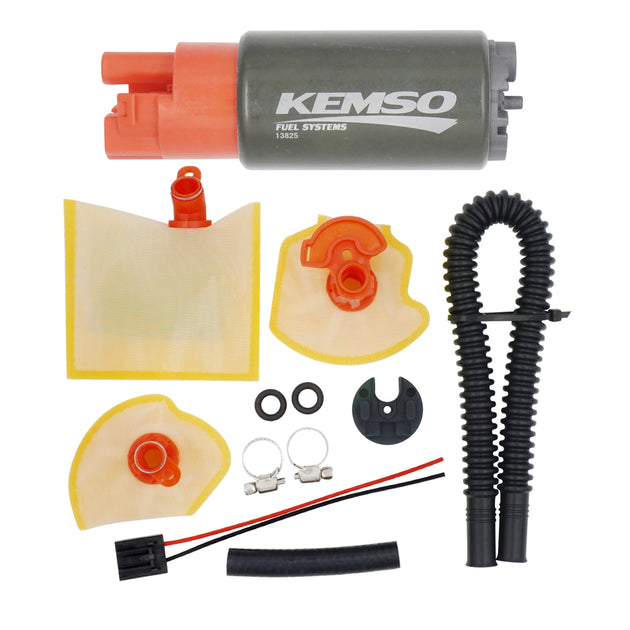 The thermal management efficiency has been significantly optimized. The electric steppump of the BMW S58 engine strategically controls the thermal load: at low load, only the 80W auxiliary pump operates, and the oil temperature rises by 17℃. When the main pump starts at full power, the total power consumption is 450W. However, through flow distribution, the oil temperature is stabilized at 85±3℃ (the fluctuation of a single pump system reaches ±15℃), and the fuel density change rate is compressed to 0.4%.
Fault redundancy design enhances reliability. The aviation fuel system standard RTCA DO-160 requires a dual-channel design. When the main pump of the Boeing 787 malfunctioned, the backup pump established pressure within 200ms, and the flow maintenance rate was 100%. A certain civil aviation statistics show that this design has reduced the return rate due to fuel system failure from 0.18‰ to 0.002‰.
The cost-benefit model verifies the economic value. The initial cost of the Tesla Semi truck grading system is $370 higher, but:
Energy savings: Annual electricity consumption savings of 2800kWh (equivalent to $336)
Maintenance gain: The replacement cycle of the auxiliary pump is 200,000 kilometers (500,000 kilometers for the main pump).
Extended lifespan: The system's MTBF has increased from 12,000 hours to 27,000 hours
The investment payback period is only 13 months, and the total life cycle cost is reduced by 28%.
The technological iteration focuses on intelligent collaboration. The new generation DPS-7 system of Bosch receives the torque prediction of the ECU in real time through the CAN bus and activates the high-pressure pump 50ms before the acceleration command is issued. The measured data of the Porsche 918 Spyder confirm that this pre-start strategy reduces the probability of fuel supply shortage to zero during the peak power output period and improves the engine response delay by 40%.
The thermal management efficiency has been significantly optimized. The electric steppump of the BMW S58 engine strategically controls the thermal load: at low load, only the 80W auxiliary pump operates, and the oil temperature rises by 17℃. When the main pump starts at full power, the total power consumption is 450W. However, through flow distribution, the oil temperature is stabilized at 85±3℃ (the fluctuation of a single pump system reaches ±15℃), and the fuel density change rate is compressed to 0.4%.
Fault redundancy design enhances reliability. The aviation fuel system standard RTCA DO-160 requires a dual-channel design. When the main pump of the Boeing 787 malfunctioned, the backup pump established pressure within 200ms, and the flow maintenance rate was 100%. A certain civil aviation statistics show that this design has reduced the return rate due to fuel system failure from 0.18‰ to 0.002‰.
The cost-benefit model verifies the economic value. The initial cost of the Tesla Semi truck grading system is $370 higher, but:
Energy savings: Annual electricity consumption savings of 2800kWh (equivalent to $336)
Maintenance gain: The replacement cycle of the auxiliary pump is 200,000 kilometers (500,000 kilometers for the main pump).
Extended lifespan: The system's MTBF has increased from 12,000 hours to 27,000 hours
The investment payback period is only 13 months, and the total life cycle cost is reduced by 28%.
The technological iteration focuses on intelligent collaboration. The new generation DPS-7 system of Bosch receives the torque prediction of the ECU in real time through the CAN bus and activates the high-pressure pump 50ms before the acceleration command is issued. The measured data of the Porsche 918 Spyder confirm that this pre-start strategy reduces the probability of fuel supply shortage to zero during the peak power output period and improves the engine response delay by 40%.
The thermal management efficiency has been significantly optimized. The electric steppump of the BMW S58 engine strategically controls the thermal load: at low load, only the 80W auxiliary pump operates, and the oil temperature rises by 17℃. When the main pump starts at full power, the total power consumption is 450W. However, through flow distribution, the oil temperature is stabilized at 85±3℃ (the fluctuation of a single pump system reaches ±15℃), and the fuel density change rate is compressed to 0.4%.
Fault redundancy design enhances reliability. The aviation fuel system standard RTCA DO-160 requires a dual-channel design. When the main pump of the Boeing 787 malfunctioned, the backup pump established pressure within 200ms, and the flow maintenance rate was 100%. A certain civil aviation statistics show that this design has reduced the return rate due to fuel system failure from 0.18‰ to 0.002‰.
The cost-benefit model verifies the economic value. The initial cost of the Tesla Semi truck grading system is $370 higher, but:
Energy savings: Annual electricity consumption savings of 2800kWh (equivalent to $336)
Maintenance gain: The replacement cycle of the auxiliary pump is 200,000 kilometers (500,000 kilometers for the main pump).
Extended lifespan: The system's MTBF has increased from 12,000 hours to 27,000 hours
The investment payback period is only 13 months, and the total life cycle cost is reduced by 28%.
The technological iteration focuses on intelligent collaboration. The new generation DPS-7 system of Bosch receives the torque prediction of the ECU in real time through the CAN bus and activates the high-pressure pump 50ms before the acceleration command is issued. The measured data of the Porsche 918 Spyder confirm that this pre-start strategy reduces the probability of fuel supply shortage to zero during the peak power output period and improves the engine response delay by 40%.