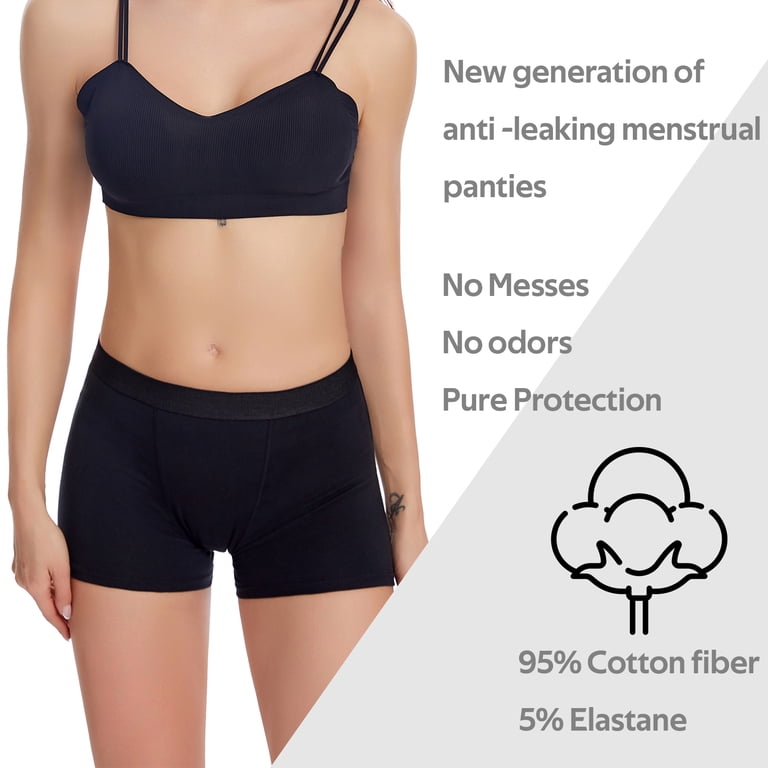
Yes. Period swimwear can be worn for swimming, surfing, paddleboarding, kayaking, snorkeling, and full beach days when its absorbency, fit, and coverage match the wearer’s flow and activity. NHS guidance places typical menstrual blood loss at about 20–90 mL per period, while FDA tampon categories provide a useful comparison: regular tampons absorb 6–9 g and super tampons 9–12 g. Period swimwear uses a close-fitting absorbent gusset rather than a conventional pad, so it does not need to hold large amounts of pool or seawater. For active use, fit around the leg openings and gusset matters as much as stated absorbency.
Period swimwear is built differently from ordinary period underwear. A typical design combines a skin-facing moisture-transfer layer, an absorbent textile layer, a fluid-resistant barrier, and an outer stretch fabric. The purpose is to collect menstrual fluid close to the body without using the thick cellulose-based structure found in disposable pads. FDA tampon standards offer useful scale: light products absorb under 6 g, regular products 6–9 g, super products 9–12 g, and super-plus products 12–15 g.
Those numbers also explain why product claims such as “equivalent to two tampons” need context. Two regular tampons could represent roughly 12–18 g under FDA ranges, while two super tampons could represent 18–24 g. A swimsuit advertised only with a tampon-equivalent number is therefore less informative than one that also states a tested fluid capacity, because brands may use different reference products and test methods.
| Use situation | What matters most | Practical check |
|---|---|---|
| Pool swimming | Fit, chlorine exposure, flow level | Check the leg seal after 20–30 minutes |
| Surfing | Stable waistband, wide gusset | Choose fuller coverage for repeated board contact |
| Paddleboarding | Waist security, quick drying | Test sitting and standing before entering water |
| Kayaking | Seam comfort while seated | Avoid bulky gussets on trips lasting several hours |
| Snorkeling | Wear time, flow level | Carry a dry replacement on longer outings |
| Beach day | Absorbency outside the water | Change when the gusset approaches normal capacity |
The table matters because menstrual flow does not disappear in water. A period comes from the shedding of blood and uterine lining, and NHS guidance states that menstrual bleeding normally lasts about 2–7 days, with roughly 20–90 mL of blood lost across the period. Water may make external flow less noticeable while the body is submerged, but the swimsuit still needs enough capacity for time spent walking, sitting, eating, or lying on the beach afterward.
A swimsuit that performs well during a 30-minute swim may face a different demand during a six-hour beach visit because most of those six hours may be spent out of the water.
Flow level therefore deserves more attention than the activity name. ACOG describes bleeding that lasts more than 7 days or soaks through one or more pads or tampons every hour for several hours as heavy menstrual bleeding; about one-third of women seek treatment for heavy bleeding at some point. Someone experiencing that level of flow should not assume a single period-swimwear bottom can replace every other menstrual product for an entire afternoon.
For lighter days, the use case is much easier. If a person normally uses a regular tampon, the FDA reference range of 6–9 g provides a rough comparison when reading a swimwear brand’s stated capacity. A product rated near that range may suit a short swim or beach session, although manufacturer testing should always take priority because textile absorbency and tampon testing are not identical measurements.
Higher-capacity designs can provide more room, but thicker is not automatically better for sport. During surfing, a bulky gusset may compress against the board while the hips move repeatedly through paddling, sitting, standing, and falling. A close one-piece suit or full-coverage bottom usually stays in position more reliably than a loose fashion bikini, particularly when waves repeatedly pull fabric away from the body.
Fit deserves its own test before a long session. Put the swimsuit on dry, squat, sit, lift each knee toward the chest, and bend at the waist. The gusset should remain centered and the leg openings should stay against the skin. If a visible gap appears during one of those movements, water movement during surfing or swimming can make the gap larger.
For paddleboarding and kayaking, prolonged sitting introduces a different issue. Pressure falls directly on the gusset for long periods, so seam placement and fabric thickness can affect comfort more than they do during a 30-minute pool swim. A paddler planning a three-hour outing should wear the suit at home for 20–30 minutes first, including several seated positions, rather than discovering a rough seam after leaving shore.
Snorkeling usually involves less friction but longer continuous water exposure. A 60-minute snorkeling session may be comfortable in a secure suit, yet the wearer still needs to consider the time before entering and after leaving the water. If a boat excursion lasts four hours, the relevant wear period is closer to four hours than to the 60 minutes spent snorkeling.
Beach days raise the same issue on a larger scale. The NHS notes that bleeding is often heaviest during the first 2 days of a period. On those days, someone who is comfortable wearing one pair from 10 a.m. until late afternoon on day 4 may need a replacement much earlier on day 1 or day 2. Packing a second bottom is more useful than assuming a fixed wear time applies throughout the cycle.
A dry replacement also improves comfort. Period swimwear is designed to manage menstrual fluid in an aquatic setting, but the complete garment still becomes wet because the outer swimsuit fabric is exposed to water. After leaving a pool or ocean, stretch fabric may dry gradually while the layered gusset remains damp longer. Changing after the swimming portion of the day can reduce prolonged contact with wet fabric.
Ordinary pads are poorly matched to this use because their job is to absorb fluid, including water around them. Period swimwear instead relies on a thinner integrated textile system. The distinction is similar to the difference between leak proof underwear made for everyday menstrual or bladder protection and swim-specific garments made for repeated water exposure; the two categories may look similar, but their material requirements are not the same.
Fabric care also affects repeat performance. Chlorinated pool water, saltwater, sunscreen, body oils, and repeated stretching all remain on the garment after use. Rinsing in cool fresh water soon after swimming removes much of that residue. A swimsuit used twice a week for six months can go through more than 50 swim-and-rinse cycles, so elastic recovery and construction quality matter more for frequent swimmers than for someone wearing the product three or four times each summer.
Washing instructions should come from the manufacturer because textile combinations differ. Many absorbent garments are washed without fabric softener because softener can leave residues on moisture-handling fibers, while high heat can damage elastane and laminated layers. The safest routine is usually cool rinsing, mild detergent, and air drying unless the care label states otherwise.
“Tampon equivalent” should be treated as a comparison tool, not a medical measurement of how long a swimsuit can be worn.
The reason is straightforward: menstrual blood loss varies by person and by day. ACOG notes a mean menstrual blood loss around 30 mL per cycle in clinical discussions, while chronic losses above about 80 mL have historically been associated with heavy bleeding and anemia risk. Someone losing most of that volume during the first 2–3 days has very different requirements from someone whose flow is spread more evenly across 5–7 days.
A person who already knows how often they change a tampon can make a more useful estimate. If a regular 6–9 g tampon usually lasts four hours on a particular day, a swimwear product whose manufacturer reports a comparable tested capacity may provide a starting point for planning. If the same tampon becomes saturated in 90 minutes, relying on one swimsuit bottom for an entire beach afternoon would be less realistic.
Internal products can also be combined with period swimwear when the wearer prefers additional coverage. A tampon or menstrual cup can handle menstrual fluid internally while the swimsuit provides backup protection. FDA documentation places super tampon absorbency at 9–12 g and super-plus at 12–15 g, giving users a standardized reference that period-swimwear marketing does not always provide.
For people who do not want to use internal products, period swimwear can still work on its own when capacity matches flow. Shorter sessions are easier to assess: a 30–60 minute pool visit on a light-flow day presents a very different requirement from five hours at a beach club or a half-day kayaking trip. Starting with shorter wear periods makes it easier to learn how a particular garment performs for an individual cycle.
Heavy bleeding deserves medical attention rather than simply purchasing a higher-absorbency swimsuit. ACOG advises medical review when bleeding requires changing a pad or tampon every 1–2 hours, continues for more than 7 days, or is accompanied by symptoms such as dizziness or fainting. Swimwear can manage menstrual fluid, but it cannot assess or treat the reason unusually heavy bleeding is occurring.